

Debt Will Strip You Naked
All poor people die twice. Only the rich die once. Death is not when you breathe your last.
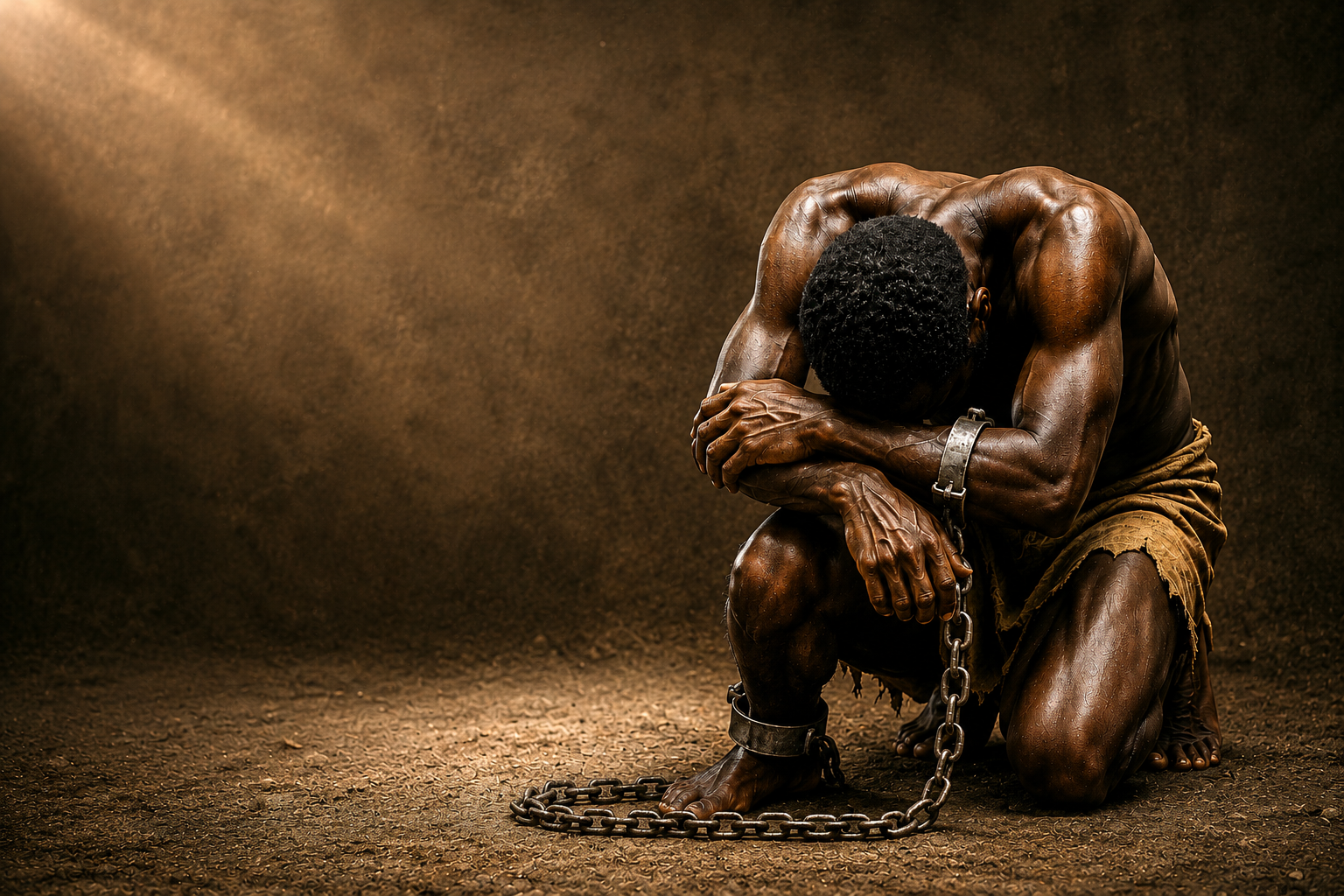
All poor people die twice. Only the rich die once. Death is not when you breathe your last. The moment you can no longer feed yourself or provide for your family, even if you're breathing, you're dead.
I felt like a dead man walking. Functional on the outside but a complete mess inside.
Every morning began with the same question:
"How am I going to survive today?"
Not next month.
Not next year.
Today.
Simple tasks like receiving phone calls became torture. Every time the phone rang, my anxiety would skyrocket. Who was it this time? Among the people I owed money to, it was hard to tell.
The worst part wasn't owing banks. Banks are impersonal. The worst part was owing friends. People who had trusted me enough to lend me money now became names I dreaded seeing on my screen.
Most of the time I didn't answer calls. I just couldn't. I had no strength. I had no answers. I had no money. It's not that I didn't want to pay what I owed; it was just that I couldn't.
Sometimes I switched off my phone. Sometimes I blocked calls. But in this era, it's not easy being completely offline. So I devised a survival tactic. I would always have my phone on silent mode. That way, I would never hear the phone ring, and this helped.
When I could muster enough energy, I would go through my call register. Could you let me know if there was an important call that could help me out of the situation? There wasn't.
How did I get into this situation? Well, I made a series of bad decisions over time.
I made a classic error. I started spending money before it had become mine—a rookie mistake, but one that set me back by millions.
As a contractor, I handled millions of shillings. The mistake was forgetting that most of it wasn't mine. It belonged to suppliers, workers, and clients. My share was the profit.
It started with what looked like a harmless decision.
Now and then, I'd dip into one project's money to solve another problem. Nothing dramatic. A supplier here. A salary there. I told myself I'd replace it as soon as the next contract landed. And, to be fair, that is exactly what happened. Another project would come in, I'd fill the gap, everyone would get paid, and life would continue as though nothing had happened.
But something was changing. The first time, I felt uncomfortable. The second time, less so. By the third time, I had convinced myself I wasn't taking money I didn't have — I was managing cash flow.
Then I became bolder. It wasn't just business expenses anymore. Every so often I'd borrow from the business for personal things too. A car repair. School fees. A holiday. An emergency at home. I always told myself the same story: Relax. Another project is coming in next month. You'll replace every shilling.
For months, that prediction came true. Money flowed in so consistently that I stopped seeing it as individual projects. It became one endless river. I genuinely believed the tap would never run dry.
After you've done that successfully enough times, you start believing you're clever. You stop seeing it as borrowing and start calling it "managing cash flow."
Before long, I wasn't moving a few thousand shillings anymore. I was shifting hundreds of thousands. Sometimes millions. One project quietly financed another while I waited for client payments.
After a while, I stopped thinking in terms of individual projects.
It was all just one pot of money.
If cash were short today, tomorrow's project would fix it.
Until there wasn't a tomorrow.
The economy slowed. Clients delayed payments. Projects I thought were certain disappeared. Referrals dried up. Then another payment was delayed. Then another. For the first time, there wasn't fresh money coming in to refill the hole I'd created.
That's when the system I had built stopped working.
The money I'd borrowed from Project A was supposed to be replaced by Project B. But Project B never came. So I borrowed from Project C to rescue Project A.
Then I needed Project D to rescue Project C. Soon I wasn't running projects anymore. I was chasing holes. Every morning I woke up owing somebody and praying another payment would arrive before another phone call did.
Then the money stopped coming. One project fell through. Then another payment was delayed. Then another.
Before long, the numbers no longer added up.
Suppliers wanted to be paid. Subcontractors chased payment. Friends wanted their money back. Clients wanted their projects completed.
On Monday, a lawyer's demand letter landed on my desk. Tuesday, auctioneers were on the phone. Wednesday, my son was sent home because I hadn't paid his school fees. Thursday, the landlord stood at my door, reminding me that sympathy does not settle rent. Friday, someone I owed tracked me down at home.
There was no time to recover from one crisis because another was already knocking.
One morning my son was not picked up by the school bus. The reason was painfully simple. I hadn't paid his school fees.
I hailed a motorbike and went with him to his school, convincing myself that if I explained the situation, they'd understand. Could they give me a few more days? I wasn't trying to avoid paying. I didn't have the money.
I found the accountant and pleaded my case.
"Please," I said. "Allow him to attend class. I'll look for the money."
He didn't raise his voice. He wasn't rude. In fact, he looked genuinely sorry.
"I'm afraid I can't," he replied. "The fees have to be paid in full."
I turned around, took my son's hand, and left. Children have an uncanny ability to sense when something is wrong. I kept wondering what must have been going through his mind as he watched his father fail at keeping him in school.
We arrived home hoping the day couldn't possibly get any worse.
It could.
My wife met me at the door.
"There's no food left," she said. "The landlord has disconnected the electricity and the water."
I just stood there, numb.
My son wasn't in school. There was no food in the house. We had no electricity. No running water. And somewhere out there, my phone was filling up with missed calls from people I owed money.
Then one day, the call I'd been praying for finally came. A big contract. The kind that makes you sit back in your chair and whisper, "Thank you, God." I stared at the figures again and again, convinced I had misread them. For the first time in months, I believed I was going to make it.
The one project that would wipe away every debt, repay every friend, silence every creditor, and allow me to breathe again.
For the first time in months, I slept soundly. Hope returned. I started making mental lists of everyone I'd pay first and imagined the relief of finally answering my phone without my heart racing. In my mind, the nightmare was over.
But there was one problem. I had no money to execute the project. But using the strength of the contract letters, I managed to get a loan.
I threw myself into that project. I traveled across the country supervising sites, chasing suppliers and solving problems. Every waking hour was spent thinking about one thing: clearing my debts.
The phone started ringing again, and this time I answered it.
I cleared school fees.
I paid off a few debts.
I caught up on rent.
For the first time in months, I thought I was going to survive this.
Then everything stopped.
A government directive brought the entire project to a standstill. Just like that, the cash flow disappeared. The cruel part was that I'd borrowed again to execute the contract, convinced the project would comfortably repay the loan. Now I had another debt, but no project to pay for it. I had spent months climbing out of the hole, only to watch the ladder disappear beneath me.
I had come to the end of the rope.
By then, the damage was no longer confined to my bank account. It had found its way into my home. My marriage had collapsed under the weight of the pressure. In trying to help me stay afloat, my wife had taken out loans in her own name.
When I couldn't repay them, the debt became hers too. There is only so much strain a relationship can absorb before it begins to crack. Ours did. We ended up living in different towns, each carrying burdens the other could no longer lighten.
From there, events unfolded frighteningly fast. One creditor I had managed to avoid for months finally caught up with me. He had connections in the police service and used them to have me picked up and taken to the station. It wasn't justice he wanted. It was leverage.
I spent three days in those cells. Three days that taught me how slowly time can move. The first night I barely slept. The concrete floor was unforgiving, the smell hung permanently in the air, and every sound echoed through the corridor.
I kept replaying my life in my head, wondering how a man who had once managed multi-million-shilling projects had ended up counting days inside a police cell over debt.
The hardest part wasn't even the cell itself. It was helplessness. Normally, when life corners you, you call a friend. But I had borrowed money from almost all of mine. Every name that came to mind was also someone I owed. I had never felt so alone.
Eventually I got out, but freedom came at a price. I sold my car for far less than it was worth to raise the money. Handing over those keys felt symbolic. Debt wasn't just taking my money anymore. It was repossessing my life, one piece at a time.
I no longer saw the world the same way. Every knock on the door sounded like trouble. Every unfamiliar number on my phone made my stomach tighten. I became suspicious of everyone.
On the few occasions I forced myself to leave the house, I'd wear a cap and keep my head down. I stopped walking confidently. Instead, I'd constantly scan my surroundings.
If I spotted a police vehicle in the distance, I'd instinctively change direction. If I saw officers on their normal patrol, I'd cross the road or duck into the nearest shop until they passed. Looking back now, they probably weren't even looking for me.
I stopped eating. Food lost its taste. The migraines were relentless. In barely three months, I lost fifteen kilograms. When I looked in the mirror, I hardly recognized the man staring back at me. Debt hadn't just emptied my pockets. It had hollowed me out. I was alive, but only in the biological sense. Everything else about me had quietly died.
Debt had taken more than my money. It had taken my business, my marriage, my reputation, and eventually the way I saw myself.
Then one morning, with nothing left to lose, I stopped running.
I sat down and looked at the full weight of what I owed.
For the first time in years, I began the long, unglamorous work of paying it back.
One shilling.
One apology.
One day at a time.


0 responses